Biohazard Cleanup Cost in 2026
Most biohazard cleanup jobs cost $1,500 to $5,000 (HomeGuide), and Fixr puts the national average at about $4,000. Unattended death cleanup is estimated at $1,500–$10,000, and crime scene cleanup at $1,500–$25,000 for the most severe scenes. Homeowner's insurance often covers this work, and state victim compensation programs can help with crime-related cleanup costs.
General biohazard cleanup averages around $4,000 (Fixr), and HomeGuide puts most professional jobs at $1,500 to $5,000, depending on the situation and how much of the home is affected. Two things are worth knowing before the figures: many homeowner's policies cover this work, and trained teams handle it discreetly so no one in the family has to.
The cost depends mostly on the scenario. Unattended death cleanup is estimated at $1,500 to $10,000 (see our dedicated unattended death cleanup cost guide at /cost/unattended-death-cleanup-cost), suicide and crime scene cleanup $1,500 to $25,000 for the most severe scenes, sewage backup $2,000 to $10,000, and hoarding cleanup anywhere from $500 for a light job to $25,000 or more for a severe one. Within each, the number of rooms affected, porous flooring like carpet, and time elapsed set where the price lands.
Biohazard Cleanup Team is a referral service — we connect you with independent local teams who confirm scope with a free, no-obligation assessment, bill the insurer directly where coverage applies, and work at whatever pace the family needs. The figures below are honest 2026 planning ranges from Fixr and HomeGuide, not a bid.
Typical national range
$1,500 – $5,000
Most jobs (HomeGuide). Fixr's national average is about $4,000, most jobs $3,000–$5,000. Severe crime scenes can run to $25,000 (Fixr), and hoarding from $500 to $25,000 or more depending on scope.
Biohazard cleanup cost by situation
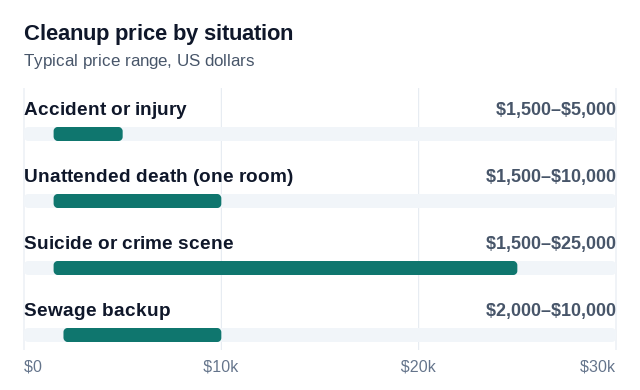
| Item | Typical range | Notes |
|---|---|---|
| Unattended death cleanup (one room) | $1,500 – $10,000 | ESTIMATE: Fixr bills it at $200–$300 an hour; the high end is the top HomeGuide reports. Rises when more time passed before discovery, as work can extend into subflooring and drywall. |
| Suicide or crime scene cleanup | $1,500 – $25,000 | ESTIMATE: Fixr bills crime scene cleanup at $400–$600 an hour and says severe homicide or suicide scenes can run to $25,000. Most jobs fall well below the top; scope depends on the affected area and materials. |
| Sewage backup cleanup | $2,000 – $10,000 | Fixr. Depends on the affected area; porous materials that can't be disinfected are removed and lawfully disposed of. |
| Accident or injury cleanup | $1,500 – $5,000 | HomeGuide's range for most biohazard jobs, used for blood and trauma cleanup before room and flooring factors. |
| Hoarding cleanup — light (rooms still usable) | $500 – $3,000 | BioCleaners levels 1–2. Priced by scope, not a flat rate; HomeGuide's typical whole-home range, which the estimator uses, is $1,000–$4,000. |
| Hoarding cleanup — moderate | $3,000 – $8,000 | BioCleaners level 3. Larger volume and sorting time; two to three rooms affected. |
| Hoarding cleanup — severe (whole home / sanitation issues) | $8,000 – $25,000 | BioCleaners levels 4–5. Whole-level or more, sometimes with sanitation issues found underneath. |
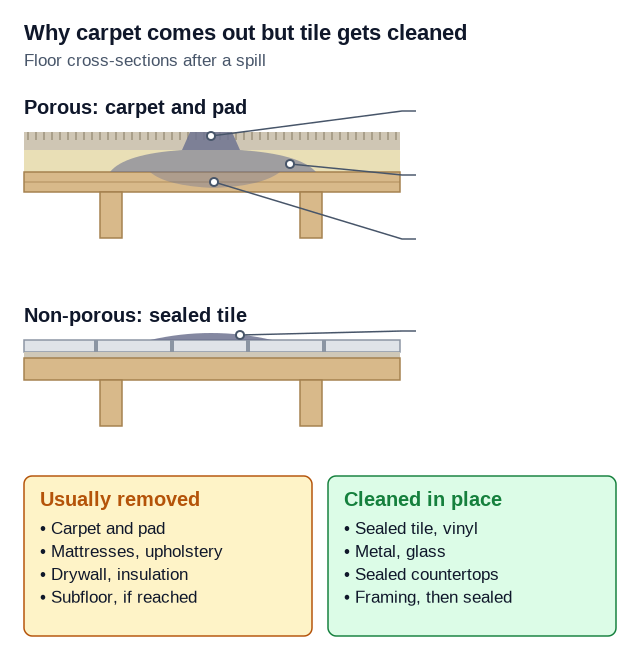
| Carpet / porous material removal and disposal | $500 – $2,000 | Adds roughly 25–40% when flooring is porous, since it's removed rather than surface-cleaned. |
What changes the price
Providers quote their own work — these are the factors that consistently move the number.
- Scenario: unattended death is estimated at $1,500–$10,000, crime scene $1,500–$25,000, sewage $2,000–$10,000, and hoarding $500–$25,000+, because each involves different materials and labor.
- How much of the home is affected: a single room is the base case; two to three rooms or a whole level scales both labor and disposal.
- Flooring type: carpet and other porous materials usually need removal and lawful disposal rather than surface cleaning, adding about 25–40%.
- Time elapsed (unattended death): the longer before discovery, the further remediation extends into subflooring, drywall, and the air space, which adds cost.
- Hoarding volume: measured by the industry's level bands rather than square footage, since sorting time and what's found underneath drive the total.
- Region and access: local labor rates, disposal fees, and site access shift the final quote up or down.
Who pays for biohazard cleanup?
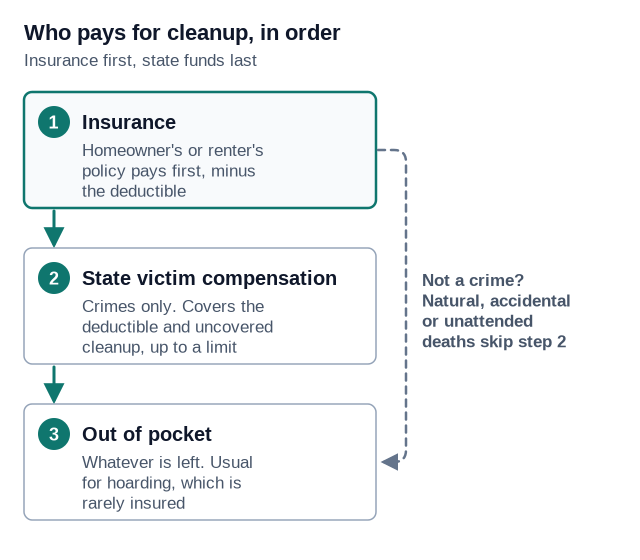
Most families don't pay the full cost out of pocket. Homeowner's insurance typically covers cleanup after a death, crime, or accident in the home — including removal and replacement of affected flooring and drywall — and professional teams usually bill the insurer directly. For crime-related cases, state victim compensation programs add another layer of help.
There are four main payers, described below. In practice, insurance is applied first, and victim compensation is the payer of last resort for crime scenes. Our insurance coverage checker at /tools/does-insurance-cover-biohazard-cleanup walks through the specifics for your situation, and our state-by-state victim compensation lookup at /tools/crime-scene-cleanup-victim-compensation-by-state shows your state's program, cleanup cap, and where to apply. For a side-by-side comparison, see our insurance vs. victim compensation guide at /compare/insurance-vs-victim-compensation-for-cleanup.
Homeowner's insurance covers most biohazard cleanup; the team bills the insurer directly and you pay the deductible. When the home is rented, the landlord or property owner's building insurance covers remediation of the unit, and the tenant's family is generally not liable for death-related cleanup.
State victim compensation reimburses crime scene cleanup costs that insurance doesn't cover, and limits vary by state. Published cleanup caps run from $500 in Pennsylvania to $7,000 in Alaska; a few states cover cleanup within their overall award limit instead, and some, such as Washington, don't pay for cleanup at all. In the states we serve, the limit runs from nothing in Washington to $5,000 in Nevada.
Out of pocket is the payer for hoarding cleanup, which is rarely insured, and for any job where no other payer is available. Many teams offer payment plans.
How location changes the number
Local labor rates, regulated-waste disposal fees, and how quickly a team can reach the site all affect the final quote.
Where crime-related, state victim compensation programs and homeowner's coverage rules vary by state, which can change what a family pays out of pocket.
Frequently Asked Questions
How much does biohazard cleanup cost in 2026?
General biohazard cleanup averages about $4,000 (Fixr), and most jobs cost $1,500 to $5,000 (HomeGuide). Unattended death cleanup is estimated at $1,500–$10,000, suicide and crime scene cleanup $1,500–$25,000 for the most severe scenes, sewage backup $2,000–$10,000, and hoarding cleanup $500 to $25,000 or more depending on scope.
How much does crime scene cleanup cost?
Our estimate is $1,500 to $25,000. Fixr reports crime scene crews charge $400 to $600 an hour and that severe homicide or suicide scenes can run to $25,000; most jobs fall well below that. The number of rooms affected, whether flooring is porous, and the materials involved set where a specific job lands. A local team confirms the exact scope with a free, no-obligation assessment.
Why does unattended death cleanup cost more when more time has passed?
Time determines how far the work has to go. Discovered quickly, cleanup may be limited to surfaces in one room. After longer periods, affected materials can extend into carpet pad, subflooring, and drywall, and the air space usually needs odor treatment — all of which adds labor, materials, and disposal.
Who pays for biohazard cleanup?
Many homeowner's policies cover cleanup after a death, crime, or accident in the home, including removal and replacement of affected flooring and drywall. Coverage depends on your policy and the cause, so teams typically verify it first and bill the insurer directly — many families pay only their deductible. For crime-related cases, state victim compensation programs can also help. See our insurance-coverage guide at /tools/does-insurance-cover-biohazard-cleanup and the state-by-state victim compensation lookup at /tools/crime-scene-cleanup-victim-compensation-by-state.
How is hoarding cleanup priced?
By scope rather than a flat rate. Light situations where rooms are still usable often run $500–$3,000, moderate ones $3,000–$8,000, and severe situations involving sanitation issues or a whole home can reach $8,000–$25,000 or more (BioCleaners, March 2026). Every reputable company starts with a free, judgment-free walkthrough. Our hoarding cleanup cost guide at /cost/hoarding-cleanup-cost breaks this down by level.
Estimates only — independent local providers quote their own pricing. Data last reviewed 2026-10.
Sources
- Fixr — Biohazard Cleanup Cost Guide (updated Jan 31, 2025) (third-party estimate)
- HomeGuide — Biohazard & Crime Scene Cleanup Costs (third-party estimate)
- HomeGuide — Hoarding Cleanup Cost (Sep 17, 2024) (third-party estimate)
- BioCleaners — Hoarding Cleanup Cost by Level (Mar 23, 2026)
- OSHA — Bloodborne Pathogens Standard, 29 CFR 1910.1030
Related guides
- What to Do After an Unattended Death at Home
- Decomposition Smell in the House: What It Means and What to Do
- Sewage Backup in the House: First Steps and When It Is a Biohazard
- Blood at Home After an Injury: What You Can and Should Not Clean
- Hoarding Cleanup Cost in 2026
- Unattended Death Cleanup Cost in 2026
- Homeowner's Insurance vs. Victim Compensation: Who Pays for Crime Scene Cleanup?
Free tools for this job
Does Insurance Cover Biohazard Cleanup? A 60-Second Answer
Answer two or three simple questions and get an honest read on who pays for cleanup — insurance usually covers more than families expect.
Use the free tool →Who Pays for Crime Scene Cleanup? State Victim Compensation Lookup
Most state victim compensation programs reimburse crime scene cleanup. Look up your state's coverage, cap, official source, and where to apply.
Use the free tool →Cities We Serve
Prefer to just talk to someone?
Send the short form — we'll route you to an independent local pro.